Friday June 12th 1863
Page 38 of 39
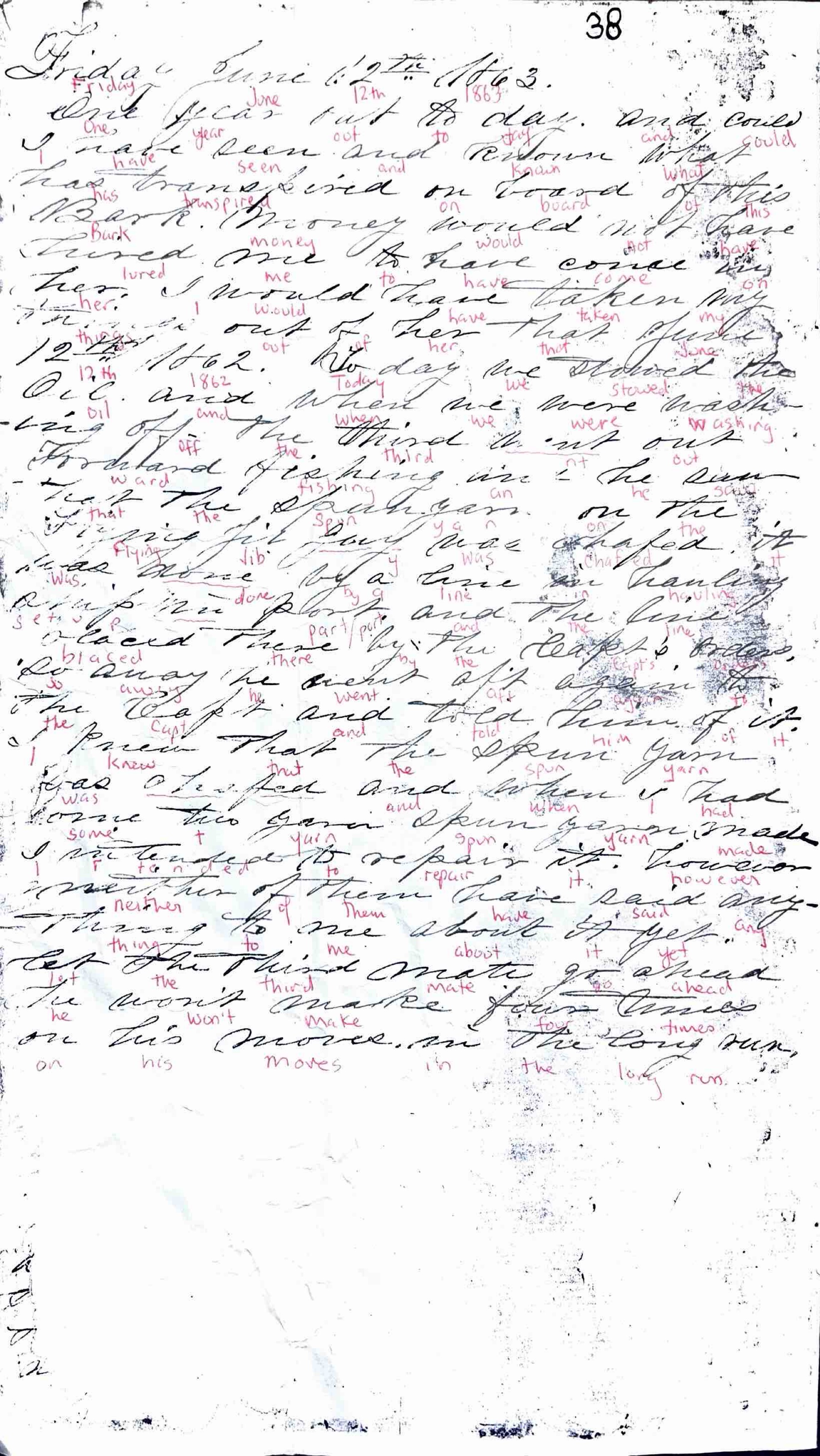
One year out to day. And could I have seen and known what has transpired on board of this Bark money would not have lured me to have come on her. I would have taken my things out of her that June 12th 1862.
Today we stowed the oil and when we were washing off1, the Third Mate was forward fishing, and he saw that the spun yarn2 on the flying jib guys3 was chafed. It was done by a line placed there by the Capt’s orders. So away he went aft again to the Capt and told him of it.
I knew that the spun yarn needed mending. I attended to repair it. However neither of them have said anything to me about it yet. Let the Third Mate go ahead - he won’t make four times on his moves in the long run4.
1 Washing off refers to cleaning the deck by sluicing it with seawater, typically using buckets or hoses, and scrubbing to remove oil, dirt, or residue. On a whaling vessel, washing off after stowing oil was routine but labor-intensive, as spilled oil made decks dangerously slippery and foul-smelling.
2 Spun yarn was a light cord made by twisting together short lengths of old rope (often oakum or rope yarns). It was commonly used aboard ships for seizings, lashings, and temporary rigging repairs. Because it was not as strong as full rope, chafing or wear required frequent attention.
3 Guys are control lines used to steady, restrain, or adjust spars, sails, or rigging. In this context, the flying jib guys helped control the flying jib and its boom, particularly when setting or trimming sail. Chafing of these lines could compromise both sail handling and safety.
4 Third Mate going directly to the Captain reporting issues, or maneuvering within the ship’s hierarchy—may pay off once or twice, but it will not yield long term success.
