July 7 - 9, 1862
Pg. 10 of 39
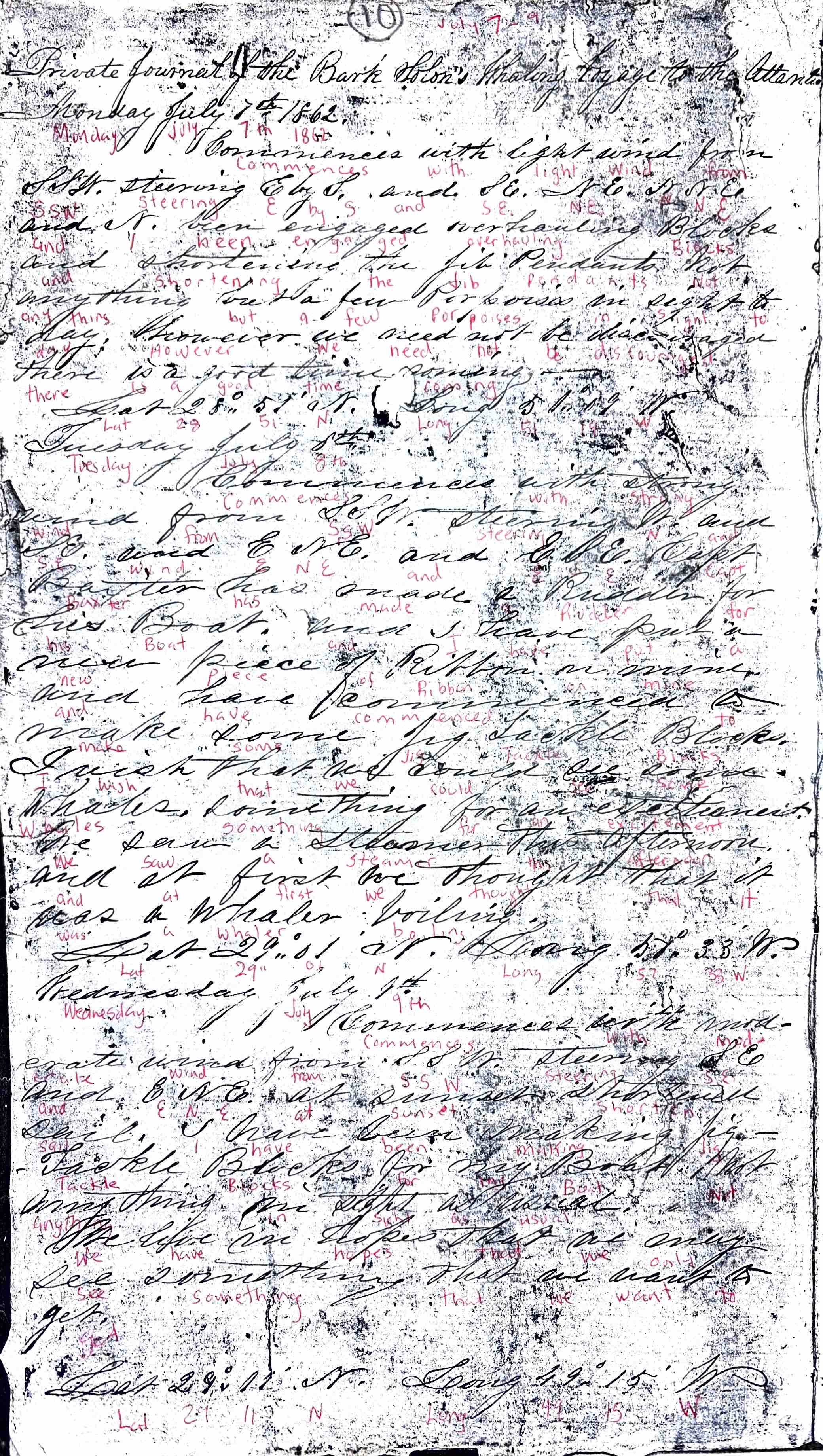
Private Journal of the Bark Solon Whaling Voyage to the Atlantic
Monday July 7th 1862
Commences with light wind from S.SW. steering E by S and SE NE NNE and N. been engaged overhauling Blocks and shortening the Jib pendants1. Not anything but a few porpoises in sight today. However we need not be discouraged there is a good time coming
Lat 28 51 N Long 51 19 W
Tuesday July 8th
Commences with strong wind from S.SW steering N and SE and E.NE and E.SE. Capt Baxter has made a Rudder for his boat. And I have put a new piece of Ribbon on mine. and have commenced to make some Jig Tackle Blocks. I wish that we could see some Whales. Something for an excitement. We saw a steamer this afternoon and at first we thought that it was a whaler boiling2.
Lat 29 01 N Long. 57 33 W
Wednesday July 9th
Commences with moderate wind from S.SW steering SE and E. NE sunset. Shortened sail. I have been making Jig Tackle Blocks for my Boat. Not anything in sight as usual. We have our hopes that we only see something that we want to get.
Lat 29 11 N Long 49 15 W
1 A jib pendant (or pennant) is a length of line or wire used on sailing vessels, including traditional whaling ships, to extend the connection point of the jib sail’s tack (its bottom-forward corner) to the ship’s bow or bowsprit
2 On a traditional, 19th-century whaling ship, the “whaler boiler” was a large, heavy, cast-iron pot called a try-pot. These pots were the central components of an on-deck furnace system known as the tryworks, and their main purpose was to extract valuable whale oil from blubber.
