June 12, 1862
Page 2 of 39
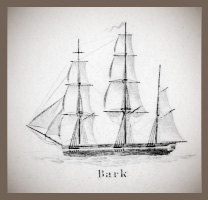
In June of 1862, a three-masted whaling Bark named Solon sailed out of New Bedford, Massachusetts under Captain Dennis D. Baxter. On board was John T. Duntlin, the ship’s first mate, whose private journal has survived more than 163 years. Thanks to my first cousin Nancy Thornton, I received a copy of the 39 page journal that was previously unknown to me.
Duntlin had already lived a full share of maritime life. Born in Boston in 1828, he spent his early adulthood in the whaling ports of Massachusetts, a world of young men chasing fortune and adventure into the far oceans. When the Solon cleared New Bedford in June 1862, John was the second-in-command—responsible for navigation, discipline, whale-boat crews, and the daily realities of a ship far from shore. He kept a private journal, separate from the captain’s official log, describing weather, positions at sea, the labor of the men, and the rhythms of a whale hunt. That journal was not meant for wide eyes. But it survived.
After the voyage, John’s life took a dramatic turn westward. He later married Lucy Ann Benson, and in 1877, in California, they welcomed a son: Frank Chester Duntlin—my great-grandfather. John died that same year, leaving baby Frank to grow up with only the stories, tools, and sea-worn objects his father left behind.
Frank Chester Duntlin passed the family memory forward to his daughter, Thelma, my maternal grandmother, and from her to my aunt Janet to her daughter Nancy, and eventually to me.

My project is deciphering the pages of that journal to share via Substack. It is a rare thing: a first-mate’s firsthand narrative of a Civil War–era whaling voyage, written in the cramped cabin of a working ship in the Atlantic.
As I publish the pages of John T. Duntlin’s private journal from the Solon, I invite you to read along—not only as a window into a vanished world, but to vicariously experience one man’s account of leaving home six months after the death of his first wife Ann P Southack (1831-1861).
Thursday, June 12th 1862
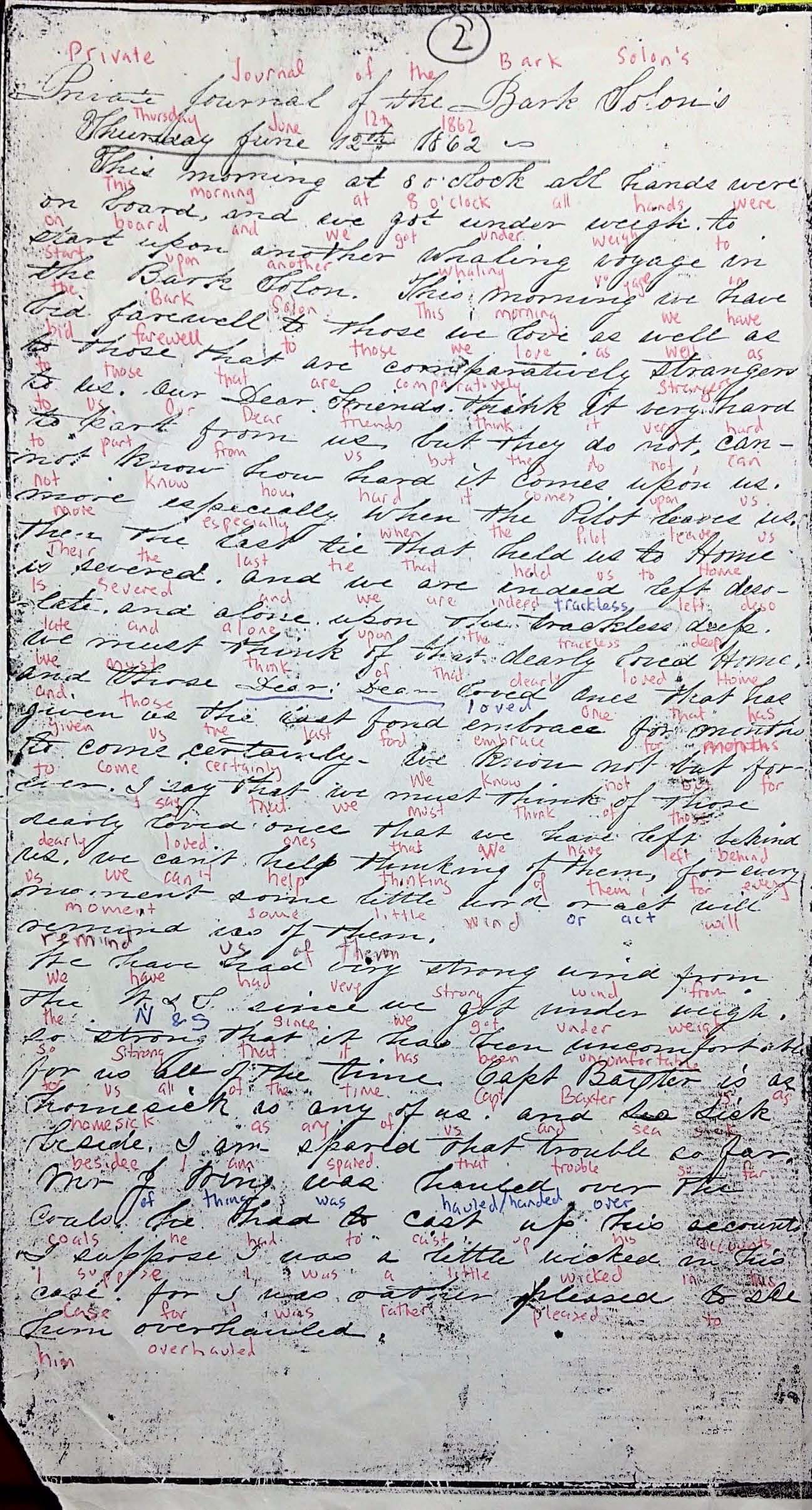
This morning at 8 o’clock all hands were on board, and we got under weigh to start upon another whaling voyage in the Bark Solon. This morning we have bid farewell to those we love as well as to those that are comparatively strangers to us. Our dear friends think it very hard to part from us, but they do not, can not know how hard it comes upon us, more especially when the Pilot leaves us. Then the last tie that held us to Home is severed and we are indeed left desolate and alone upon the trackless deep.
We must think of that dearly loved Home and those dear dear loved ones that had given us the last fond embrace for months to come certainly. We know not but forseen. I say that we must think of those dearly loved ones that we have left behind us, we can’t help thinking of them, for every moment some little wind or act will remind us of them.
We have had very strong wind from the N & S since we got under weigh, so strong that it has been uncomfortable for us all of the time. Capt Baxter is as homesick as any of us, and sea sick beside. I am spared that trouble so far. ? of thing was hauled over the coals 1he had to cast up his accounts.2 I suppose I was a little wicked in this case. For I was rather pleased to see him overhauled.
Note: This is a scan of the original page with my deciphering in red ink. There are a few words I could not identify.
Thanks for reading! This post is public so feel free to share it.
Hi Michelle, what a great Project! I have examined page 2 and have a couple of comments.
- "under weigh": This was an accepted spelling at that time. It was probably a mix of "under way" and "weigh anchor" (raise anchor). In Melville's "Moby Dick", Chapter 22 "Merry Christmas", the term is used three times as the Pequod gets "under weigh".
- "? of thing": I believe it must be a name e.g. "Mr G Fring" or something like that, and the author is reporting about this person. I found a crew list for that journey, but can't discover any name looking quite like that. Perhaps the crew list is not complete.
- "hauled over ? free coals": This is "hauled over the coals", which means "angrily reprimanded", "chewed out".
- "cast up his accounts": This is slang for "vomit".
Looking forward to more!
Bob
I am so happy for your interest and helpful observations. I will continue to add images of each page. It takes a crew to read these pages. Someone in the past used the journal as a scrapbook by pasting memorabilia on some pages. My cousin removed them with vinegar and water. She has taken the original to Concord Press. They will use imaging software to create a cleaner copy. Meanwhile I will work with what I have. Can you send me the crew list? Michelle
1“hauled over the coals” means “angrily reprimanded” or “chewed out” (Bob Fitch)
2“Cast up his accounts” slang for “vomit” (Bob Fitch)
