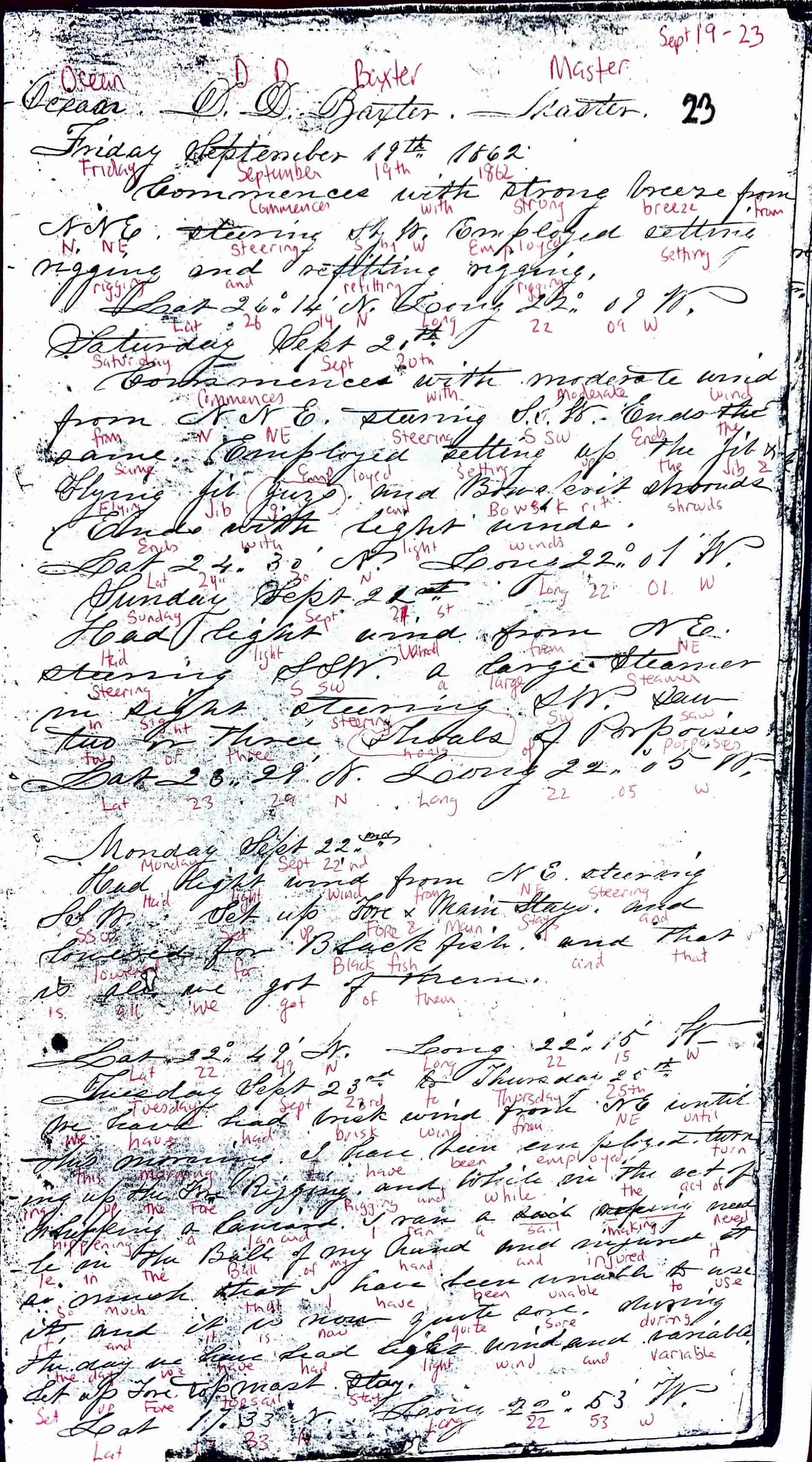
September 19-25, 1862
Pg. 23 of 39
Ocean D. D. Baxter Master
Friday September 19th 1862
Commences with strong breeze from N NE. Steering S by W. Employed setting rigging and refitting rigging.
Lat 26 14 N Long 22 09 W
Saturday Sept 20th
Commences with moderate wind from N NE. Steering S. SW. Ends the same. Employed setting up the Jib & Flying Jib guys1. And bowsprit shrouds2. Ends with light winds.
Lat 24 30 N Long 22 01 W
Sunday Sept 21st
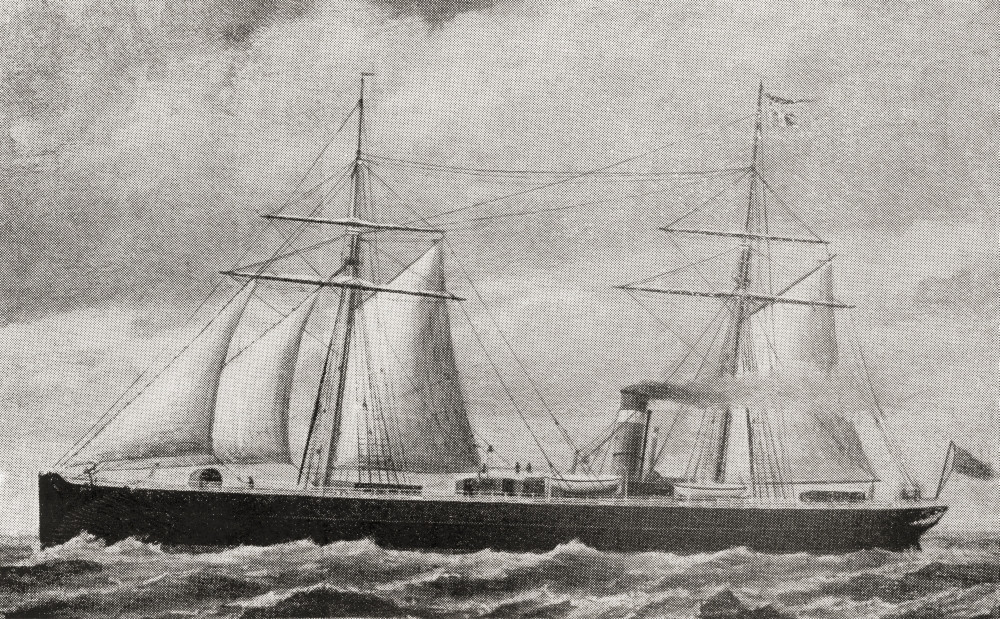
Had light wind from NE. Steering S. SW. a large Steamer3 in sight. Steering SW. Saw two or three shoals of Porpoises.
Lat 23 29 N Long 22 05 W
Monday Sept 22nd
Had light wind from NE steering S SW. Set up Fore & Main Stays. And lowered for Black fish and that is all we got of them.
Lat 22 49 N Long 22 15 W
Tuesday Sept 23rd to Thursday 25th
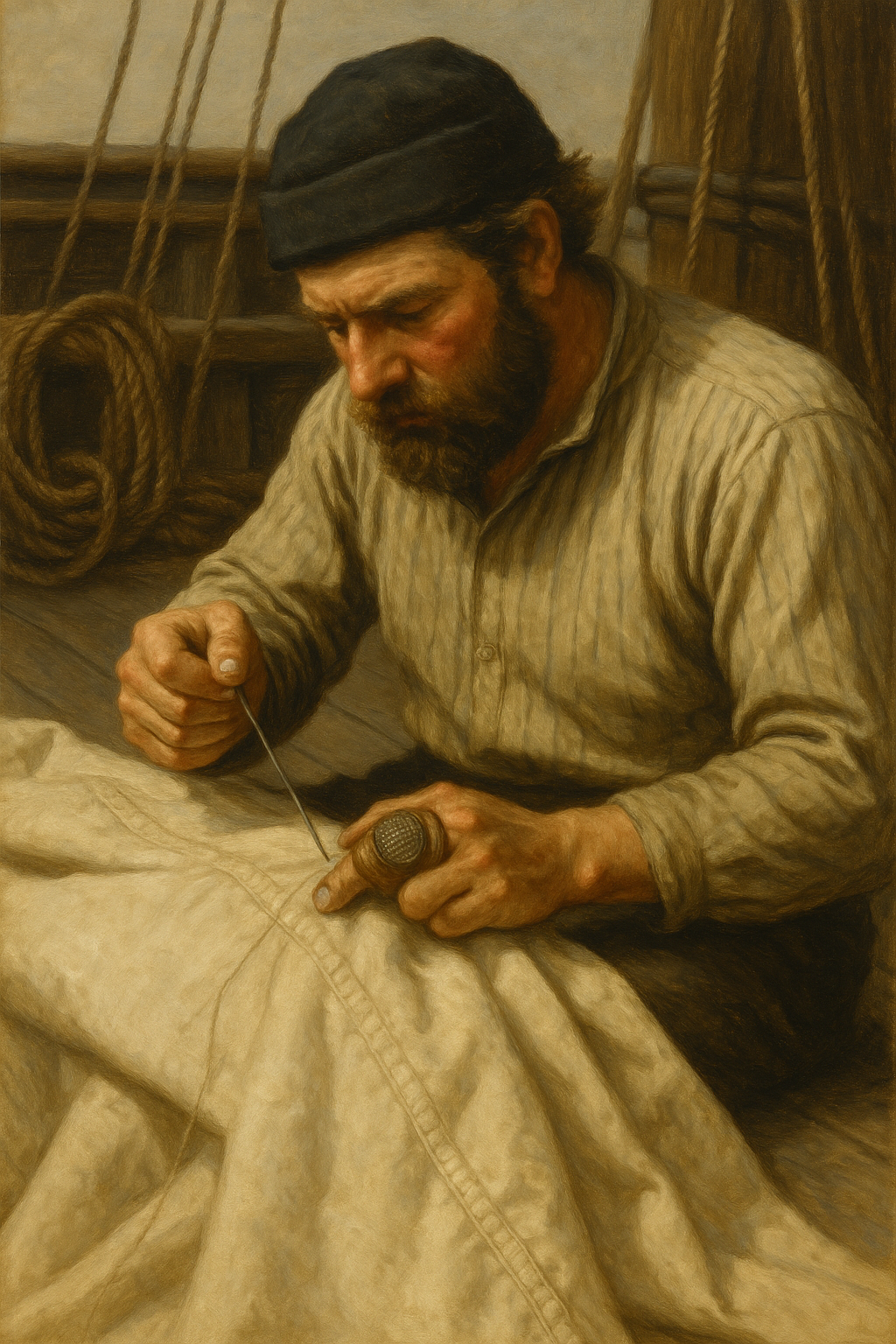
We have had brisk wind from NE until this morning. I have been employed turning up the Fore Rigging and while in the act of snipping a lanyard I ran a sail making needle4 in the ball of my hand. And injured it so much that I have been unable to use it. And it is now quite sore. During the day we have had light wind and variable. Set up Fore topsail stay.
Lat 17 33 N Long 22 53 W5
Flying jib guys are control lines used to steady and control the flying jib, the outermost headsail set farthest forward on a whaling ship.
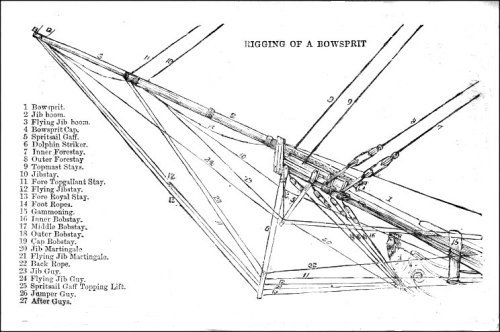
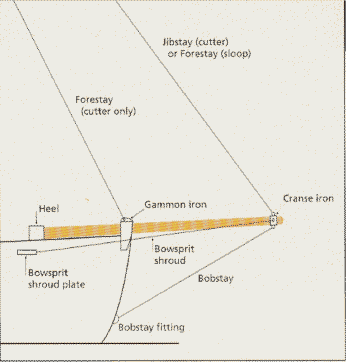
Bowsprit shrouds are adjusted when entering longer trade-wind passages.
From the late 1850s onward, whaling logs increasinging note: “A steamer in sight,” “Passed a steamer,” “Spoke a steamer.”
Sailmaking needles were thick, rigid steel. Often 2-4 inches long.
Across these dates the Solon moves decisively southward along ~22° W longitude, from 26° N to 17° N in less than a week. This is a purposeful descent toward equatorial whaling grounds. This is not wandering. It is strategic repositioning.
